
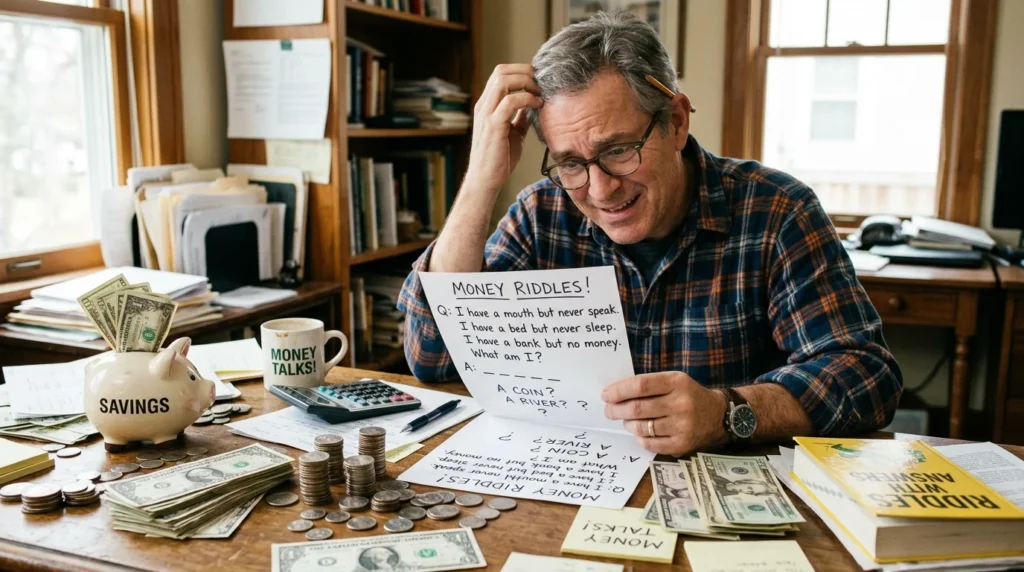
🪙 Easy Money Riddles for Kids
Start with these simple money puzzles designed for young learners and family fun.
- I am round, shiny, and can make a tiny clinking sound in your pocket. What am I? 👉 A coin
- I am a small place where you keep coins and bills. What am I? 👉 A wallet
- I have a face and a value, but I cannot smile or speak. What am I? 👉 A coin
- I am paper or polymer and represent a certain amount of money. What am I? 👉 A banknote
- I can be saved in a piggy bank but cannot be fed like a real pig. What am I? 👉 Money
- I am something you receive when you pay more than the price of an item. What am I? 👉 Change
- I can buy something in a store but cannot buy friendship. What am I? 👉 Money
- I can be opened at a bank but have no door. What am I? 👉 An account
- I can be empty or full, but I am not a cup. What am I? 👉 A wallet
- I can grow when you save me and shrink when you spend me. What am I? 👉 Your money
💰 Coin Riddles With Answers
Coins may be small, but they make excellent riddle subjects.
- I am small enough to hide beneath a finger, yet I can have a value of one, five, ten, or more. What am I? 👉 A coin
- I have two sides but am not a road. What am I? 👉 A coin
- You can flip me into the air to make a choice. What am I? 👉 A coin
- I may have a portrait on one side and a symbol or design on the other. What am I? 👉 A coin
- I can make a jingling sound when several of me ride together in a pocket. What am I? 👉 Coins
- I am round, but I am not a wheel; I have value, but I am not a number by myself. What am I? 👉 A coin
- I can disappear into a vending machine and return as a snack or drink. What am I? 👉 A coin
- I may be tossed, counted, collected, or saved. What am I? 👉 A coin
- I can be old enough to become a collector’s treasure. What am I? 👉 A coin
- I am money you can hold between two fingers. What am I? 👉 A coin
💵 Cash and Banknote Riddles
Now trade the jingling coins for paper money.
- I am flat, foldable, and printed with pictures and numbers. What am I? 👉 A banknote
- I can fit inside your wallet but cannot fit inside a coin slot. What am I? 👉 Paper money
- I may have a portrait, a serial number, and a stated value. What am I? 👉 A banknote
- I can travel from a bank to a store and then into another person’s wallet. What am I? 👉 Cash
- I am worth more than the paper used to make me. What am I? 👉 A banknote
- I can be counted in a stack but cannot be counted as one single coin. What am I? 👉 Banknotes
- I may be folded, carried, saved, or spent. What am I? 👉 Cash
- I can have a number printed on me that tells you how much I represent. What am I? 👉 A banknote
- I can be exchanged for goods and services but cannot be eaten or worn. What am I? 👉 Money
- I may look like a simple piece of paper, but I can represent real purchasing power. What am I? 👉 A banknote
🏦 Bank Riddles
These clues take you behind the scenes of saving, borrowing, and managing money.
- I am a place where people may deposit money, withdraw money, or apply for certain financial services. What am I? 👉 A bank
- I can hold your money without having a pocket. What am I? 👉 A bank account
- I have branches but no leaves. What am I? 👉 A bank
- I can have a balance but never lose my footing. What am I? 👉 A bank account
- I can be checked online without having a physical shape. What am I? 👉 An account balance
- I can receive your money and keep a record of it. What am I? 👉 A bank account
- I have a number, but I am not a lottery ticket. What am I? 👉 An account
- I can lend money but cannot lend you a helping hand. What am I? 👉 A bank
- I can have interest added to me over time. What am I? 👉 A savings account
- I have a teller but tell no stories. What am I? 👉 A bank
🐷 Saving Money Riddles
Saving can be turned into a fun puzzle about patience and planning.
- I become bigger when you put money away and smaller when you take money out. What am I? 👉 Savings
- I am often shaped like a pig and help children learn to save. What am I? 👉 A piggy bank
- I ask you to wait today so you can have more tomorrow. What am I? 👉 Saving
- I grow when you regularly add money to me. What am I? 👉 Savings
- I am money you choose not to spend right away. What am I? 👉 Savings
- I can help you prepare for something expensive in the future. What am I? 👉 A savings fund
- I may be kept in a bank instead of under a mattress. What am I? 👉 Savings
- I am a habit that can help you reach a financial goal. What am I? 👉 Saving money
- I start with small amounts but can become much larger over time. What am I? 👉 Savings
- I am the opposite of spending everything you have. What am I? 👉 Saving
🛒 Spending and Shopping Riddles
These riddles turn everyday purchases into playful challenges.
- I leave your wallet lighter but your shopping bag fuller. What am I? 👉 Spending money
- I tell you how much something costs before you buy it. What am I? 👉 A price
- I am given to a cashier in exchange for an item or service. What am I? 👉 Payment
- I am what you receive when your payment is larger than the purchase price. What am I? 👉 Change
- I can be found on a shelf and have a number showing what I cost. What am I? 👉 A price tag
- I may be paid with coins, cash, a card, or another payment method. What am I? 👉 A purchase
- I can make you happy when you buy me but sad when your wallet becomes empty. What am I? 👉 A purchase
- I tell you whether something costs five dollars or fifty. What am I? 👉 A price
- I disappear from your wallet when you buy something. What am I? 👉 Money
- I can turn money into food, clothes, toys, or services. What am I? 👉 Spending
🧮 Money Math Riddles
Ready to put your counting skills to work?
- I have two coins worth five cents each. How much money do I have? 👉 Ten cents
- I have three coins worth ten cents each. How much money do I have? 👉 Thirty cents
- A toy costs $5 and you pay with $10. How much change should you receive? 👉 $5
- You have $20 and spend $7. How much remains? 👉 $13
- A snack costs $3 and a drink costs $2. How much do they cost together? 👉 $5
- You save $5 each week for four weeks. How much have you saved? 👉 $20
- You have $10 and receive another $5. How much do you have now? 👉 $15
- A book costs $8 and you pay with $10. What change do you receive? 👉 $2
- You have four quarters. How much money do they represent? 👉 $1
- You have ten coins worth ten cents each. What is their total value? 👉 $1
🧠 Tricky Money Riddles
These aren’t all about counting. Read the wording carefully.
- I can be made, kept, lost, broken, or earned, but I am not a coin. What am I? 👉 A promise
- I can be rich without having money and poor without being broke. What am I? 👉 A person in spirit or experience
- I can have a balance but never stand on two feet. What am I? 👉 A bank account
- I can be spent without being money, especially when you are waiting for something. What am I? 👉 Time
- I can be bought, but my value may depend on who is selling me. What am I? 👉 An item
- I can be worth a lot even though I take up almost no space. What am I? 👉 An idea
- I can be saved, spent, wasted, or borrowed, but I am not cash. What am I? 👉 Time
- I can have interest without being curious. What am I? 👉 A loan or savings account
- I can be paid but never touched. What am I? 👉 A bill
- I can be free but still be priceless. What am I? 👉 Love
😂 Funny Money Riddles
Sometimes the best financial advice comes with a joke.
- Why did the dollar bill go to school? 👉 It wanted to improve its cents
- Why did the coin go to the doctor? 👉 It wasn’t feeling like itself
- Why did the wallet take a vacation? 👉 It needed to get away from all the spending
- Why did the piggy bank refuse dessert? 👉 It was already stuffed
- Why did the penny feel important? 👉 It knew every cent counted
- Why did the bank teller bring an umbrella? 👉 There was a chance of interest
- Why did the coin sit quietly? 👉 It didn’t want to make cents of itself
- Why did the dollar cross the road? 👉 To get to the other side of the cash register
- Why did the wallet become a comedian? 👉 It had plenty of change
- Why did the money go to the gym? 👉 It wanted to get in better shape
🧒 Money Riddles for Preschoolers
These simple clues introduce young children to basic money ideas.
- I am round and shiny and you can count me. What am I? 👉 A coin
- I can hold your coins and bills. What am I? 👉 A wallet
- I am a little house for your saved coins. What am I? 👉 A piggy bank
- I can buy a toy at a store. What am I? 👉 Money
- I am something you pay when you buy something. What am I? 👉 Money
- I have a number that tells how much I am worth. What am I? 👉 A coin
- I can jingle in your pocket. What am I? 👉 Coins
- I can be saved for a special toy. What am I? 👉 Money
- I can be put into a piggy bank. What am I? 👉 A coin
- I am something you get back when you pay too much. What am I? 👉 Change
🎯 Money Riddles for Adults
These clues mix financial language with wordplay.
- I can be earned without being printed, spent without being money, and saved without a bank. What am I? 👉 Time
- I can be paid every month even though I never go shopping. What am I? 👉 A bill
- I can grow while you sleep if money is placed in the right kind of account. What am I? 👉 Interest
- I can be borrowed today and returned later, sometimes with an extra cost. What am I? 👉 A loan
- I can be high or low, fixed or variable, and often affects borrowing costs. What am I? 👉 An interest rate
- I can protect money from being spent immediately by putting it somewhere harder to access. What am I? 👉 Savings
- I can describe everything you own after subtracting what you owe. What am I? 👉 Net worth
- I can be planned before you shop and broken after you shop. What am I? 👉 A budget
- I can tell you whether you are spending more than you earn. What am I? 👉 A budget
- I can be positive, negative, or zero and describe what remains after money comes in and goes out. What am I? 👉 A balance
🎲 How to Use Money Riddles
Money riddles can be more than simple entertainment. They can also become useful learning activities.
For children, use the easier clues to practice identifying coins, counting values, recognizing prices, and understanding change. Give them pretend money and let them solve a riddle before making a pretend purchase.
In a classroom, teachers can turn the math riddles into quick warm-up activities. Students can work individually or in teams and explain how they reached their answers.
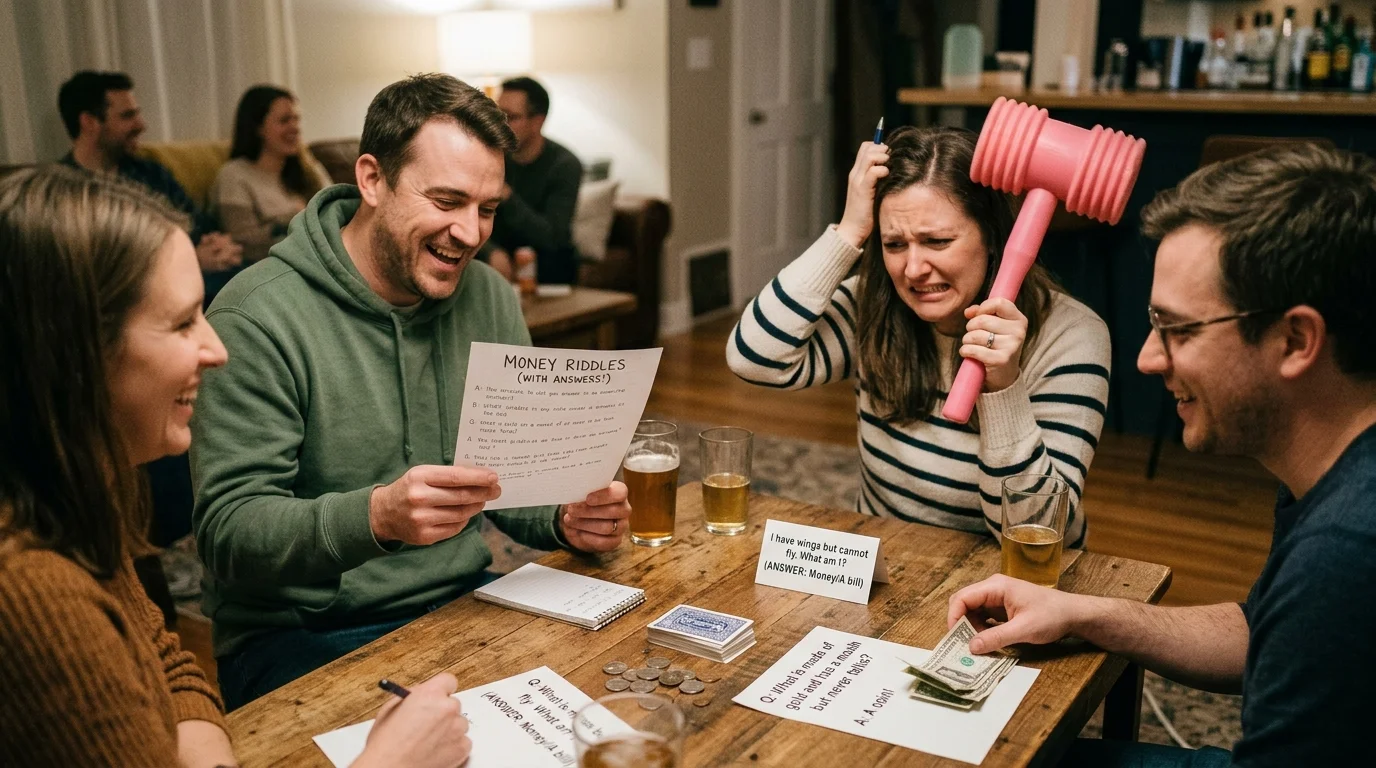
For families, try a “money riddle challenge” during dinner. One person reads a clue while everyone writes down an answer. Award one point for each correct solution.
Adults can make the game harder by using riddles involving budgets, interest, loans, saving, and everyday financial language.
The best part is that the game can be adapted to almost any age. Keep the numbers small for younger players and introduce more complex reasoning as players become comfortable.