
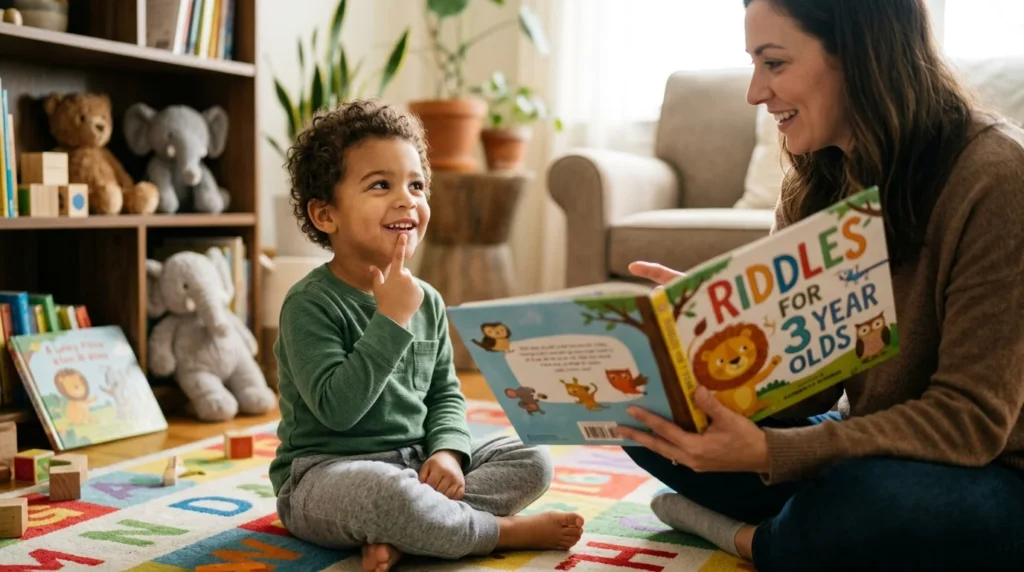
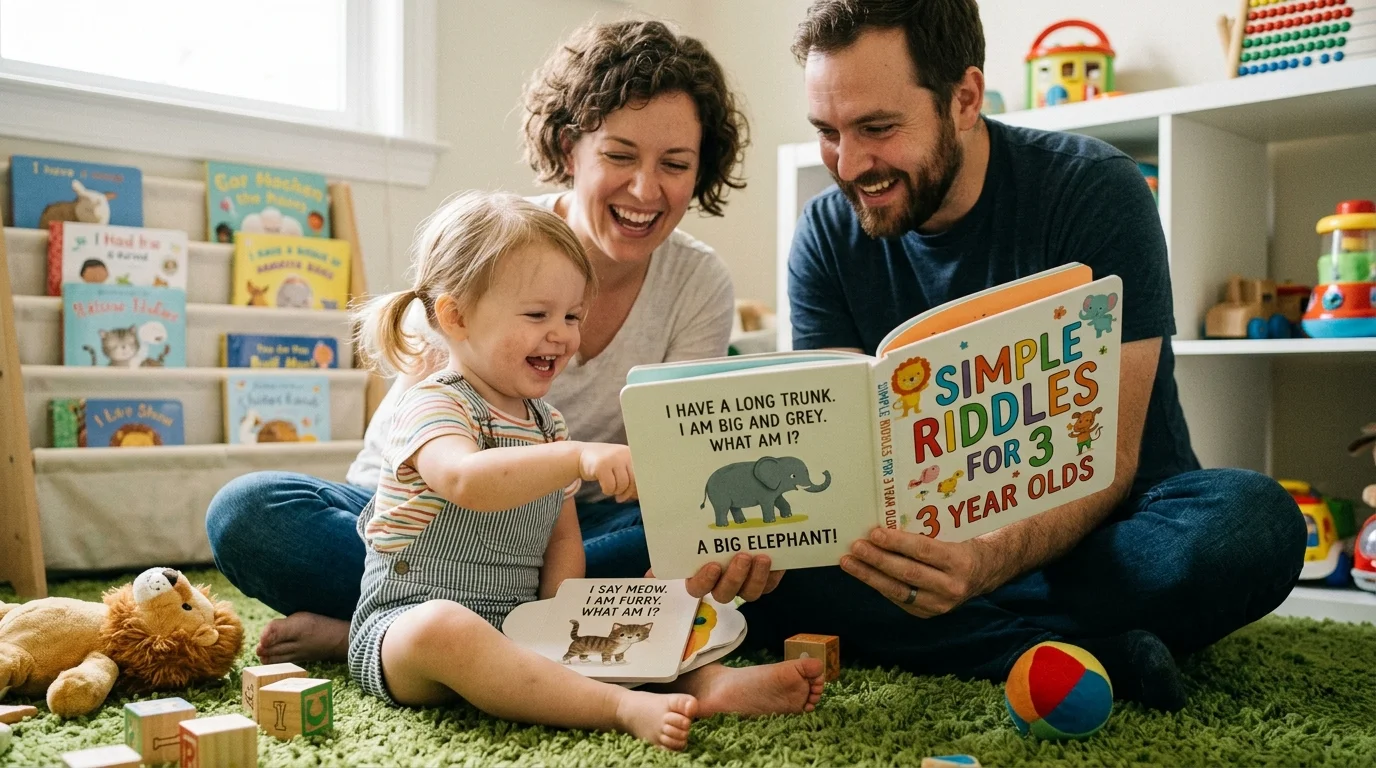
 🐶 Easy Animal Riddles for 3 Year Olds
Animals are perfect for preschool riddles because most young children already recognize their sounds, movements, and features.
- I have four legs, a wagging tail, and say “woof.” What am I? 👉 A dog
- I say “meow” and like to chase little toys. What am I? 👉 A cat
- I am big, gray, and have a long trunk. What am I? 👉 An elephant
- I have long ears and love to hop. What am I? 👉 A rabbit
- I say “moo” and live on a farm. What am I? 👉 A cow
- I am yellow, fluffy, and say “quack.” What am I? 👉 A duckling
- I have feathers, wings, and say “tweet.” What am I? 👉 A bird
- I am pink, have a curly tail, and say “oink.” What am I? 👉 A pig
- I am slow, carry a shell, and have four little legs. What am I? 👉 A turtle
- I live in water and have fins instead of feet. What am I? 👉 A fish
- I have a mane and roar loudly. What am I? 👉 A lion
- I am black and white and love to munch bamboo. What am I? 👉 A panda
- I hop and say “ribbit” near ponds. What am I? 👉 A frog
- I have spots and a very long neck. What am I? 👉 A giraffe
- I am fluffy, woolly, and say “baa.” What am I? 👉 A sheep
These riddles are especially fun when adults make the animal sound after revealing the answer. Invite children to bark, moo, roar, or hop like the animal they guessed.
🧸 Toy Riddles for Preschoolers
Toys are familiar objects in a three-year-old’s world. Turning favorite playthings into riddles can make children eager to listen for clues.
- I have four wheels and can zoom across the floor. What am I? 👉 A toy car
- I have blocks that you can stack up high. What am I? 👉 Building blocks
- I am soft, cuddly, and love bedtime hugs. What am I? 👉 A stuffed animal
- I have a round shape and you can roll or kick me. What am I? 👉 A ball
- I can be pushed, pulled, and played with, and I have a handle. What am I? 👉 A toy wagon
- I have colorful pieces that fit together. What am I? 👉 A building toy
- I can fly through the air when you throw me. What am I? 👉 A ball
- I am soft and fluffy and may sit on your bed. What am I? 👉 A teddy bear
- I have wheels and may carry a tiny toy passenger. What am I? 👉 A toy train
- I can make music when you press my little keys. What am I? 👉 A toy piano
After each answer, encourage children to talk about their own toys. This can turn ten quick riddles into a longer conversation about colors, shapes, sizes, and favorite games.
🍎 Food Riddles for 3 Year Olds
Food riddles can be deliciously simple. They also give young children practice recognizing colors, shapes, tastes, and everyday foods.
- I am red, round, and grow on a tree. What am I? 👉 An apple
- I am yellow, long, and easy to peel. What am I? 👉 A banana
- I am orange and crunchy like a snack. What am I? 👉 A carrot
- I am small, round, and can be red or purple. What am I? 👉 A grape
- I am cold, sweet, and come in many flavors. What am I? 👉 Ice cream
- I am white inside, have a shell, and can be scrambled. What am I? 👉 An egg
- I am round, cheesy, and often cut into slices. What am I? 👉 Pizza
- I am sweet, colorful, and often found in a lunchbox. What am I? 👉 Fruit
- I am soft, white, and often spread with butter. What am I? 👉 Bread
- I am yellow, creamy, and often melted on food. What am I? 👉 Cheese
- I am small, sweet, and can have chocolate chips. What am I? 👉 A cookie
- I am red, juicy, and often found in salads. What am I? 👉 A tomato
- I am cold, white, and often poured over cereal. What am I? 👉 Milk
- I am crunchy, salty, and can come in a little bag. What am I? 👉 Chips
- I am sweet, sticky, and made by bees. What am I? 👉 Honey
Food riddles can also help children practice describing objects. Ask, “What color is it?” or “Is it soft or crunchy?” to extend the game naturally.
🌈 Color Riddles for Toddlers
Colors are an important part of early learning, and riddles can turn color practice into a guessing game.
- I am the color of grass and leaves. What color am I? 👉 Green
- I am the color of a bright sunny banana. What color am I? 👉 Yellow
- I am the color of a strawberry. What color am I? 👉 Red
- I am the color of the sky on a clear day. What color am I? 👉 Blue
- I am the color of an orange fruit. What color am I? 👉 Orange
- I am the color of grapes and some flowers. What color am I? 👉 Purple
- I am as dark as the night sky. What color am I? 👉 Black
- I am as bright as fresh snow. What color am I? 👉 White
- I can be the color of a pink flower or a little pig. What color am I? 👉 Pink
- I am the color of chocolate and tree bark. What color am I? 👉 Brown
For extra fun, point to objects around the room that match the answer. This transforms a riddle into a mini treasure hunt.
🚗 Vehicle Riddles for Little Kids
Cars, buses, trains, airplanes, and other vehicles are exciting subjects for preschoolers. These clues use simple features children can recognize.
- I have four wheels and take you down the road. What am I? 👉 A car
- I am big, carry many people, and stop for passengers. What am I? 👉 A bus
- I have many wheels and travel on tracks. What am I? 👉 A train
- I have wings and fly high in the sky. What am I? 👉 An airplane
- I have two wheels and you can pedal me. What am I? 👉 A bicycle
- I am a boat with a motor and can travel across water. What am I? 👉 A motorboat
- I have flashing lights and help people during emergencies. What am I? 👉 An ambulance
- I am red, carry firefighters, and have a loud siren. What am I? 👉 A fire truck
- I have two wheels and a motor and can ride on roads. What am I? 👉 A motorcycle
- I travel on water and can carry people across a lake. What am I? 👉 A boat
Try making the sound of each vehicle after the answer. “Choo-choo,” “vroom,” and “beep-beep” can make the activity especially entertaining.
🏡 Everyday Object Riddles for 3 Year Olds
Young children are surrounded by objects that seem ordinary to adults but can become fascinating puzzles for little minds.
- I have hands but cannot clap. What am I? 👉 A clock
- I open and close and help you enter a room. What am I? 👉 A door
- I am soft and you put your head on me at night. What am I? 👉 A pillow
- I keep you warm when you sleep. What am I? 👉 A blanket
- I have bristles and help clean your teeth. What am I? 👉 A toothbrush
- I hold water and you can drink from me. What am I? 👉 A cup
- I help you see yourself when you look at me. What am I? 👉 A mirror
- I have pages and pictures and you can read me. What am I? 👉 A book
- I can hold your toys and have a lid. What am I? 👉 A toy box
- I help you sit at the table. What am I? 👉 A chair
- I have legs but cannot walk. What am I? 👉 A table
- I help keep food cold. What am I? 👉 A refrigerator
- I can make a room bright when you turn me on. What am I? 👉 A lamp
- I have a handle and help you carry things. What am I? 👉 A bag
- I can ring when someone wants to talk to you. What am I? 👉 A phone
These are great for preschool classrooms because children can often point to the answer immediately. That physical connection can make the clues easier to understand.
☀️ Nature Riddles for 3 Year Olds
Nature provides endless opportunities for simple observation. These riddles encourage children to think about the world around them.
- I shine brightly in the daytime and warm the Earth. What am I? 👉 The sun
- I come out at night and look round in the sky. What am I? 👉 The moon
- I twinkle high above you at night. What am I? 👉 A star
- I fall from clouds and make the ground wet. What am I? 👉 Rain
- I am white, fluffy, and float across the sky. What am I? 👉 A cloud
- I grow from the ground and can have colorful petals. What am I? 👉 A flower
- I am tall, have a trunk, and grow leaves. What am I? 👉 A tree
- I blow through the air but you cannot see me. What am I? 👉 Wind
- I am green and grow in parks and gardens. What am I? 👉 Grass
- I may appear after rain and have many colors. What am I? 👉 A rainbow
- I am small, crawl on the ground, and have six legs. What am I? 👉 An insect
- I grow on trees and can provide shade on a sunny day. What am I? 👉 Leaves
- I can be smooth, hard, and found beside rivers or beaches. What am I? 👉 A stone
- I am cold, white, and fall from the sky in winter. What am I? 👉 Snow
- I am a body of water where fish may swim. What am I? 👉 A pond
Nature riddles are especially useful outdoors. After reading one, invite the child to find the answer in the garden, park, or yard.
🐝 Bug and Small Creature Riddles
Tiny creatures can create big excitement. These riddles introduce children to insects and other small animals in a playful way.
- I have colorful wings and fly from flower to flower. What am I? 👉 A butterfly
- I make honey and buzz around flowers. What am I? 👉 A bee
- I am tiny, have many legs, and may live in a colony. What am I? 👉 An ant
- I have eight legs and make a web. What am I? 👉 A spider
- I can glow at night like a tiny living light. What am I? 👉 A firefly
- I have wings and make a buzzing sound near your ear. What am I? 👉 A fly
- I can jump and chirp on warm evenings. What am I? 👉 A cricket
- I have a colorful shell and move very slowly. What am I? 👉 A snail
- I may have bright wings and visit flowers. What am I? 👉 A moth
- I am small, green, and can jump a long way. What am I? 👉 A grasshopper
Children often love making the sounds and movements associated with these creatures, turning the riddle session into an active game.
🌙 Bedtime Riddles for 3 Year Olds
Bedtime riddles should be gentle, familiar, and easy enough that children can solve them without becoming frustrated.
- I shine in the night sky and sometimes look like a crescent. What am I? 👉 The moon
- I am soft, cozy, and used when you sleep. What am I? 👉 A pillow
- I keep you warm while you dream. What am I? 👉 A blanket
- I have four legs but stay beside your bed. What am I? 👉 A bed
- I can be a story you hear before closing your eyes. What am I? 👉 A bedtime story
- I twinkle above you while you sleep. What am I? 👉 A star
- I am soft and cuddly and may sleep beside you. What am I? 👉 A stuffed animal
- I turn off the light and help make the room dark. What am I? 👉 A light switch
- I can be worn on your feet when you get ready for bed. What am I? 👉 Pajamas
- I am quiet, cozy, and comes after a busy day. What am I? 👉 Sleep
A calm riddle game can become part of a familiar bedtime routine. Keep the pace slow and let children answer without pressure.
🎉 Funny Riddles for 3 Year Olds
At this age, the unexpected answer can be just as exciting as the correct one. These silly riddles are designed to get little listeners smiling.
- What animal says “moo” and lives on a farm? 👉 A cow
- What has a tail but is not a dog? 👉 A kite
- What has ears but cannot hear? 👉 Corn
- What has a face but cannot smile? 👉 A clock
- What has legs but cannot run? 👉 A table
- What can you open but cannot eat? 👉 A door
- What has a bed but never sleeps? 👉 A flower bed
- What can fly but has no wings? 👉 A kite
- What has teeth but cannot bite? 👉 A comb
- What has one eye but cannot see? 👉 A needle
- What gets wetter while helping you get dry? 👉 A towel
- What has a neck but no head? 👉 A bottle
- What has hands but cannot wave? 👉 A clock
- What can be full of holes but still hold water? 👉 A sponge
- What goes up when rain comes down? 👉 An umbrella
If a child gives a funny answer, laugh with them. Riddles at this age are about curiosity and communication, not perfect performance.
👨👩👧 Family Riddles for Preschoolers
Family-themed riddles can make a child feel involved because the clues connect to people and routines they know.
- I may give you hugs and help you when you are small. Who am I? 👉 A parent
- I may be your mother’s mother. Who am I? 👉 A grandmother
- I may be your father’s father. Who am I? 👉 A grandfather
- I can be your brother or sister and play with you. Who am I? 👉 A sibling
- I may read you a story before bed. Who am I? 👉 A parent
- I can be little and grow bigger every year. Who am I? 👉 A child
- I may have four legs and be part of your family. Who am I? 👉 A pet
- I can cook food and share a meal with you. Who am I? 👉 A family member
- I may live with you and help make your home happy. Who am I? 👉 A family member
- I can give you a hug without saying a word. What am I? 👉 Love
These clues can naturally lead to conversations about family relationships, kindness, caring, and the people who help children feel safe and loved.
🎨 How to Make Riddles Fun for 3 Year Olds
Three-year-olds usually enjoy participation more than competition. Give children plenty of time to think before revealing an answer. If they seem unsure, repeat the clue using simpler words or give one extra hint.
Pictures can make riddles easier. You can draw an animal, point to an object, use toy animals, or act out a clue. Movement is especially helpful for young children who find it difficult to sit still for long periods.
You can also turn the riddles into a treasure hunt. Give one clue at a time and let the child search for the object. For example, a riddle about a pillow can lead them to the bedroom, while a riddle about a cup can send them toward the kitchen.
Most importantly, celebrate curiosity. A child who asks, “Could it be a dog?” is already practicing reasoning—even if the answer turns out to be something else.
🧠 Tips for Parents and Preschool Teachers
Keep each riddle short and use words the child already understands. If a clue contains an unfamiliar word, explain it rather than expecting the child to know it.
Use facial expressions, gestures, animal sounds, and objects whenever possible. These additions can turn a spoken riddle into a mini performance.
For group activities, let children answer together instead of requiring everyone to wait for one person. You can also ask children to invent their own riddles using toys or classroom objects.
There is no need to rush through a list. Five enjoyable riddles can be more valuable than twenty questions that leave a child tired or frustrated.
The goal is simple: listen, think, guess, laugh, and try again.