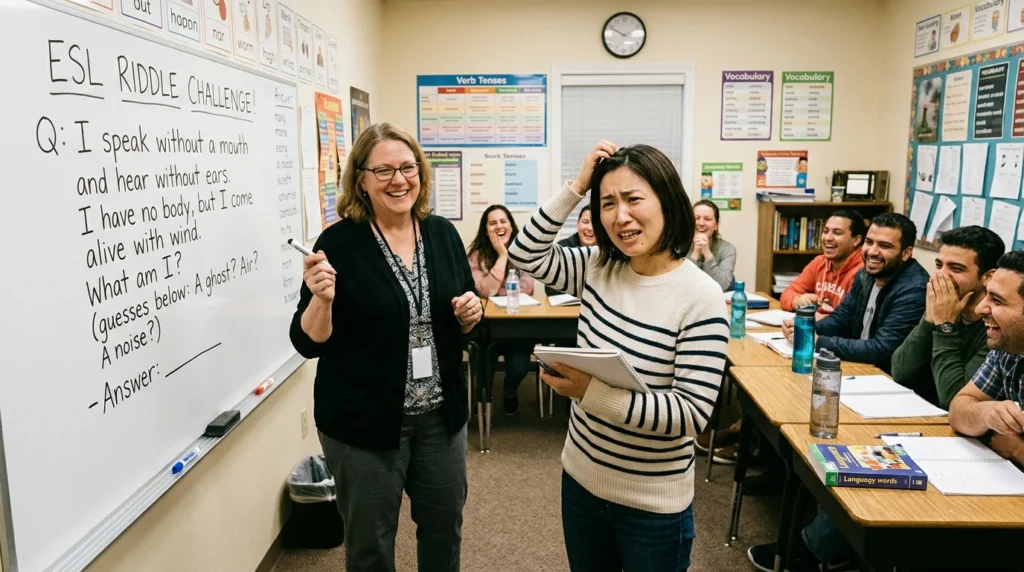
esl riddles

275+ ESL Riddles for Fun English Learning

Learning English becomes much more exciting when lessons include games, laughter, and a little mystery. That’s why ESL riddles are a favorite activity in classrooms around the world. They encourage students to think carefully about words, practice speaking, expand vocabulary, and build confidenceβ€”all while having fun.

Whether you’re an English teacher searching for engaging classroom warm-ups, a parent helping your child learn English, or an ESL student looking to improve language skills, these original riddles are designed for every level. They use simple vocabulary, everyday objects, and familiar situations, making them easy to understand while still encouraging creative thinking.

Use these riddles for classroom discussions, conversation clubs, homework, online lessons, icebreakers, or family learning time. Get ready to guess, laugh, and learn with this collection of easy and enjoyable ESL riddles.


πŸ’‘ Did You Know?

  • Solving riddles helps English learners improve vocabulary, reading comprehension, and critical thinking at the same time.
  • Asking and answering riddles encourages students to practice speaking naturally and confidently in English.

🎯 Riddle of the Day

I help you speak without a sound,
Inside each word, I can be found.
Can you guess the answer? Comment below!

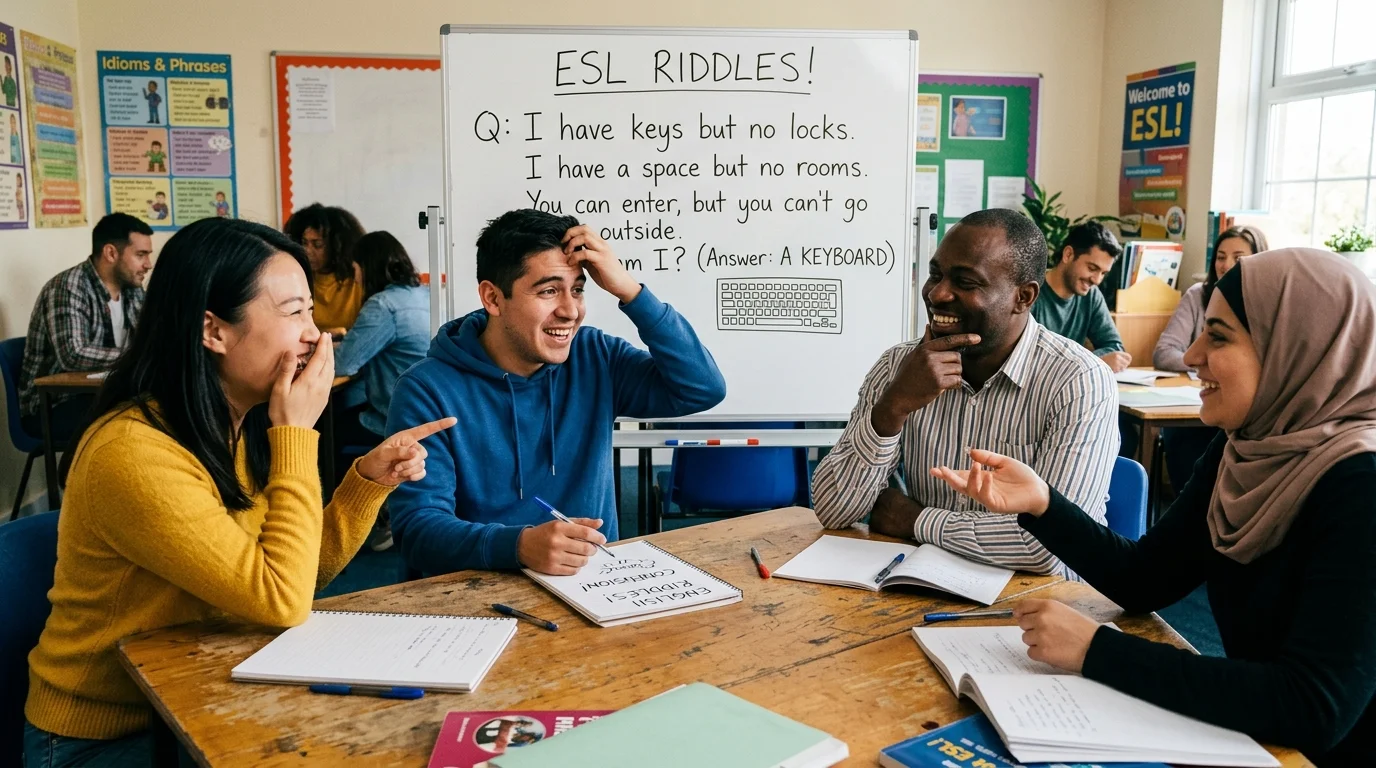
esl riddles

πŸ“š Easy ESL Riddles

  • What has pages but is not a tree? πŸ‘‰ A book.
  • What has letters but is not the alphabet? πŸ‘‰ A mailbox.
  • What has hands but cannot clap? πŸ‘‰ A clock.
  • What has wheels but cannot walk? πŸ‘‰ A bicycle.
  • What has keys but cannot unlock a door? πŸ‘‰ A piano.
  • What has a face but never smiles? πŸ‘‰ A clock.
  • What can you open but never close with your hands? πŸ‘‰ Your eyes.
  • What gets wetter the more it dries? πŸ‘‰ A towel.
  • What has a neck but no head? πŸ‘‰ A bottle.
  • What has one mouth but never eats? πŸ‘‰ A river.

🏫 Classroom ESL Riddles

  • What writes but never talks? πŸ‘‰ A pencil.
  • What carries books without reading them? πŸ‘‰ A backpack.
  • What helps you erase mistakes? πŸ‘‰ An eraser.
  • What opens every lesson but has no key? πŸ‘‰ A textbook.
  • What hangs on the wall and teaches time? πŸ‘‰ A clock.
  • What sits on your desk but never studies? πŸ‘‰ A notebook.
  • What is full of words but never speaks? πŸ‘‰ A dictionary.
  • What helps teachers explain ideas? πŸ‘‰ A whiteboard.
  • What is small but can answer big questions? πŸ‘‰ A calculator.
  • What helps you learn by listening? πŸ‘‰ Your ears.

πŸ—£οΈ Vocabulary Building Riddles

  • What begins every sentence with a capital letter? πŸ‘‰ The first word.
  • What tells you what a word means? πŸ‘‰ A dictionary.
  • What can be spoken, written, or read? πŸ‘‰ A word.
  • What grows bigger every time you learn? πŸ‘‰ Your vocabulary.
  • What connects words to make ideas? πŸ‘‰ A sentence.
  • What ends with a period, question mark, or exclamation mark? πŸ‘‰ A sentence.
  • What helps you spell correctly? πŸ‘‰ A dictionary.
  • What has many meanings depending on how you use it? πŸ‘‰ A word.
  • What helps people understand each other? πŸ‘‰ Language.
  • What improves every time you practice? πŸ‘‰ Your English.

🌎 Everyday English Riddles

  • What keeps you dry when it rains? πŸ‘‰ An umbrella.
  • What keeps food cold without snow? πŸ‘‰ A refrigerator.
  • What helps you travel without walking? πŸ‘‰ A bus.
  • What shines during the day? πŸ‘‰ The sun.
  • What lights the sky at night? πŸ‘‰ The moon.
  • What helps you hear music? πŸ‘‰ Your ears.
  • What opens a room without pushing? πŸ‘‰ A door.
  • What keeps your feet comfortable? πŸ‘‰ Shoes.
  • What can hold water but has no mouth? πŸ‘‰ A cup.
  • What grows in a garden and smells nice? πŸ‘‰ A flower.

πŸŽ‰ Conversation Practice Riddles

  • What starts a friendly conversation? πŸ‘‰ A question.
  • What gets better when everyone shares ideas? πŸ‘‰ A discussion.
  • What helps two strangers become friends? πŸ‘‰ A conversation.
  • What travels from one person to another without walking? πŸ‘‰ A message.
  • What grows stronger the more you speak English? πŸ‘‰ Confidence.
  • What makes every language lesson more fun? πŸ‘‰ A game.
  • What helps you remember new words? πŸ‘‰ Practice.
  • What is free but valuable in every classroom? πŸ‘‰ A smile.
  • What makes mistakes useful? πŸ‘‰ Learning.
  • What turns simple words into real conversations? πŸ‘‰ Speaking.

🧠 ESL Brain Teasers

  • What can be broken without touching it? πŸ‘‰ A promise.
  • What becomes easier the more you practice? πŸ‘‰ English.
  • What has many answers but begins with one question? πŸ‘‰ A riddle.
  • What can travel around the world while staying in your pocket? πŸ‘‰ A stamp.
  • What grows richer every time you learn a new word? πŸ‘‰ Your knowledge.
  • What opens minds but has no handle? πŸ‘‰ Curiosity.
  • What teaches without giving homework? πŸ‘‰ Experience.
  • What becomes clearer after every lesson? πŸ‘‰ Understanding.
  • What is the best tool for learning a language? πŸ‘‰ Practice.
  • What never stops improving? πŸ‘‰ Your ability to learn.

🌟 How to Use ESL Riddles in the Classroom

ESL riddles are a simple way to make lessons more interactive and memorable. Teachers can use them as warm-up activities, conversation starters, vocabulary reviews, pair-work challenges, exit tickets, or speaking exercises. Encourage students to explain their answers in English, create their own riddles, and work together to solve puzzles. This approach builds communication skills while making language learning enjoyable and engaging

❓ Frequently Asked Questions

What are ESL riddles?

ESL riddles are simple brain teasers designed to help English learners improve vocabulary, speaking, reading, listening, and critical thinking skills.

Are ESL riddles suitable for beginners?

Yes. Most ESL riddles use everyday vocabulary and straightforward sentence structures, making them ideal for beginners and intermediate learners.

How can teachers use ESL riddles?

Teachers can use them as classroom warm-ups, speaking activities, vocabulary games, homework, icebreakers, or group discussions.

Do ESL riddles help students learn English?

Yes. They encourage learners to think about word meanings, practice communication, and remember new vocabulary in a fun way.

Can adults use ESL riddles?

Absolutely. ESL riddles are enjoyable and effective for learners of all ages, including children, teenagers, and adults.

Conclusion

Learning English doesn’t have to feel difficult or repetitive. These ESL riddles turn everyday lessons into exciting opportunities to think, speak, and discover new vocabulary through play. Whether you’re teaching a classroom, studying at home, or practicing with friends, these riddles help build confidence while making every lesson more enjoyable. Bookmark this collection for future learning sessions, share it with fellow students and teachers, and challenge others to solve the riddles together. Every new word you learn is another step toward speaking English with confidence, curiosity, and a smile. πŸ“š

Scroll to Top